































Small businesses want new revenue without big upfront bets. Print on demand (POD) makes that possible. You design. A partner prints after each order and ships to your customer. You avoid buying stock in advance. That keeps risk low and cash free for growth. Industry estimates point to rapid growth over the next decade, driven by ecommerce and personalization.
What is print on demand?
Print on demand is a model where products are made only after a customer orders. T-shirts, mugs, phone cases, and wall art are printed by a third-party provider and shipped directly to the buyer. You skip inventory, storage, and bulk purchasing. You pay when you sell.
Why POD works for small businesses
POD cuts inventory risk to zero. Startup costs are minimal since most platforms connect to your store and charge per item produced. It scales easily because fulfillment stays with the provider whether you sell ten items or ten thousand. You can also test many product types and designs without financial risk. If something does not sell, remove it and try the next idea.
How it works, end to end
A customer places an order on your site. The order syncs to your POD partner. They print, pack, and ship with your branding where supported. You keep the spread between your retail price and your landed cost. Fulfillment stays off your plate so you can focus on the audience and offer.
A simple 6-step rollout
1) Pick products that fit your audience
Start narrow. One to three items is enough. Tees, hoodies, mugs, totes, and posters are common winners. Choose what your customers already use and love. A tight first release converts better than a crowded catalog.
2) Choose a POD partner
Evaluate product range, base cost, print quality, and shipping speed to buyers. Confirm your store integration and branding options for packing slips or labels. Order a sample before launch. Check print clarity, fabric, sizing, packaging, and delivery time.
3) Create designs
Use one logo-led design, one clean type slogan, and one illustration or pattern. Keep it on brand. High contrast. High resolution. Prepare light and dark variants so the same concept works across different product colors.
4) Integrate with your sales channel
Connect the POD app to Shopify, WooCommerce, Etsy, or similar. Create products in the partner dashboard and sync to your storefront. Set shipping rules and taxes. Turn on automatic fulfillment so orders route straight to production. Add a note on each product page: Printed on demand. Production takes 3 to 5 days. Shipping follows.
5) List and price
Write concise descriptions with fabric, fit, and care. Use provider mockups now, then replace them with photos after samples arrive. Price from an all-in view that covers base cost and shipping while staying fair to the buyer.
6) Launch, learn, and expand
Announce your list and social channels. Pin a banner on the homepage. Offer a seven day launch incentive. Review performance weekly. Double down on the top two SKUs. Retire the weakest one. Add one new design every two weeks for the first eight weeks.
An integration example
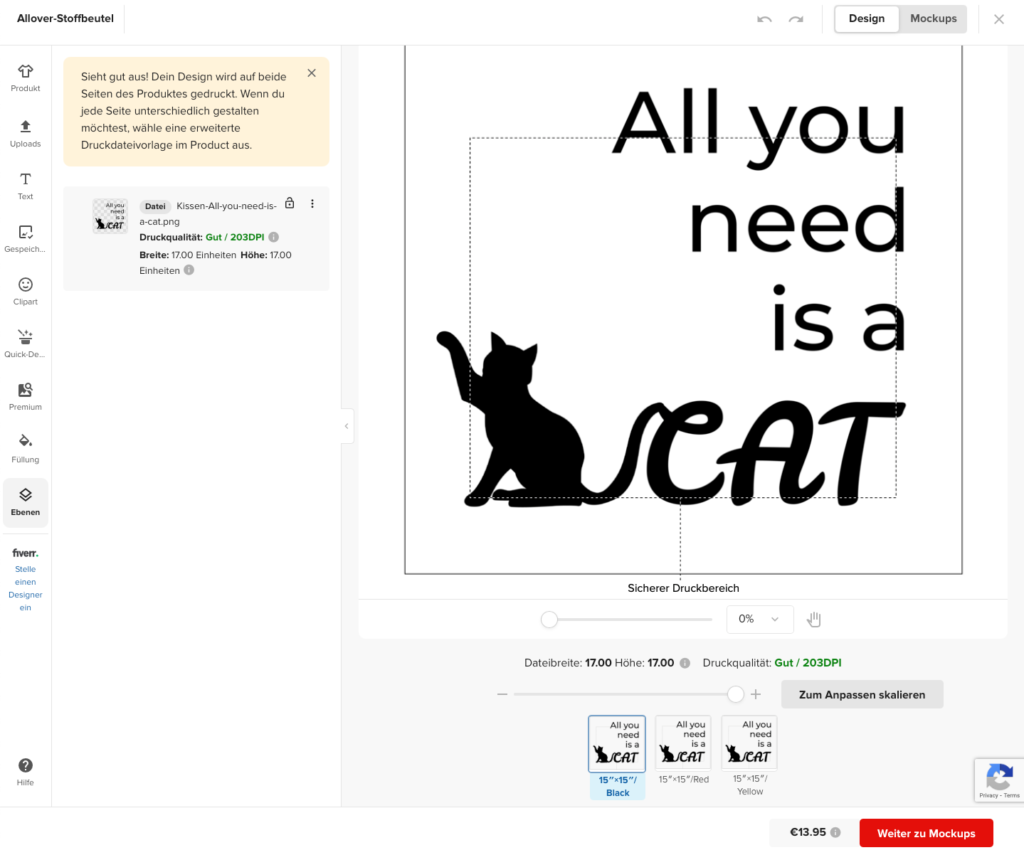
Use a leading POD provider with Shopify or WooCommerce. Install the app or plugin. In the provider dashboard, choose a product, upload your design, place it, and set sizes and colors. Confirm the base cost. Set your retail price in your store with a starting target margin around 40 percent for apparel. Publish so the app creates the product page with images. Place a sample order to check taxes, shipping, and branding on the packing slip. When it looks right, enable automatic fulfillment so new orders route to print and ship to the buyer.
Pricing and margins in one minute
Work backward from a fair all-in customer price. Know your base cost, include shipping, and set a margin target. Sanity check against similar items in your niche. Keep apparel at a 40 to 50 percent target margin. Use free-shipping thresholds to protect margin when rates rise.
Quick math example
Base plus fulfillment: €11.90
Shipping: €4.10
Landed cost: €16.00
Retail price: €26.00
Estimated gross per item: €10.00
Quality and customer experience
Approve samples before launch. Add clear size charts and care notes. State production timelines on product pages and in emails. Write a simple replacement policy for misprints or defects. Encourage customer photos and repost with permission to build trust.
Common challenges and fixes
Do not launch too many products at once. Avoid complex art on low-quality blanks. Place fulfillment near your buyer base to reduce transit time. Price with math, not gut feel. Treat merch as a real product line with a clear story behind each design.
A 14-day action plan
Week 1. Choose a partner and order two samples. Create three designs. Connect the app to your store. Build two product pages with clear copy and mockups. Draft a simple replacement policy for misprints or damaged items.
Week 2. Approve samples or adjust. Set final pricing and shipping rules. Announce the launch. Review the first 50 visits to fix titles, images, or prices that underperform. Replace mockups with photos of approved samples on body or in use.
Conclusion
POD adds revenue without inventory risk. Start small, ship quality, and iterate fast. Expand designs that work and replace those that do not. You keep the upside while keeping risk low, which is exactly what a small business needs.






 makes that possible. You design. A partner prints after each order and ships to your customer.)